News
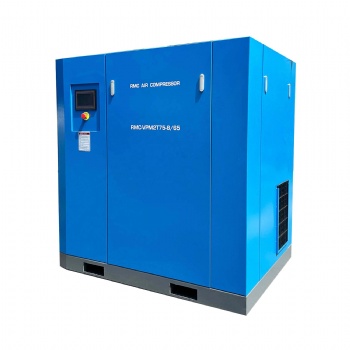
Advantages and Applications of low pressure screw air compressors
Key Technical Advantages of low pressure screw air compressors
Significant Energy Savings: Operating a standard 8-bar compressor throttled down to 4 bar wastes roughly 20–30% more power. A native 4-bar compressor reduces the internal pressure ratio, directly cutting motor power consumption.
Higher Free Air Delivery (FAD): Provides a much larger volume of airflow per kilowatt of input power compared to high-pressure equivalents.
Lower Operating Temperatures: Reduced compression ratios lower thermal stress on internal components, extending lubricant life and overall equipment durability.
Continuous Duty Cycle: Designed to run non-stop under heavy industrial loads with low noise and vibration.

Features of low pressure screw air compressors:
Custom Low-Pressure Air-End: Features longer rotor profiles or custom displacement geometries tailored specifically to compress air to 4 bar without over-compression.
Variable Frequency Drive (VFD): Frequently integrated to automatically match motor speed to real-time plant air demand, maximizing efficiency.
Oil-Injected or Oil-Free Options: Oil-injected models offer maximum longevity and cooling, while oil-free variants are used in sensitive environments like food processing or textiles.

Typical applications of low pressure screw air compressors:
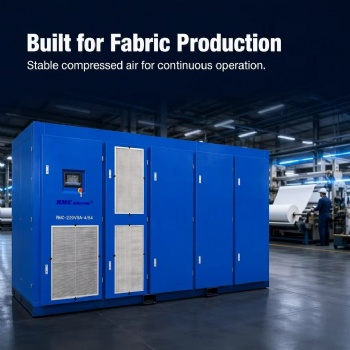
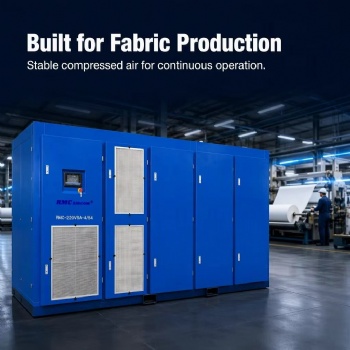
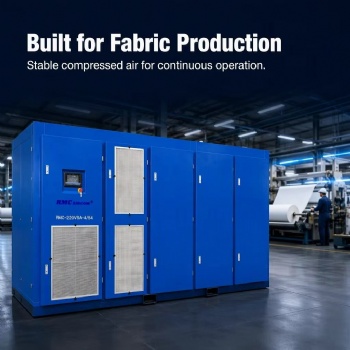
1. Textile industry: air-jet weaving looms, fiber blowers, pneumatic textring
2. Glass manufacturing: bottle blowing, mold cooling, pneumatic conveyance.
3. Pneumatic conveying: transporting bulk powder, cement, or grain through piping.
4. Aeration and wastewater treatment: oxygenating bio-reactors, water treatment tanks, and fermentation.



 Send Email
 售前客服
售前客服 Skype
Skype WhatsApp